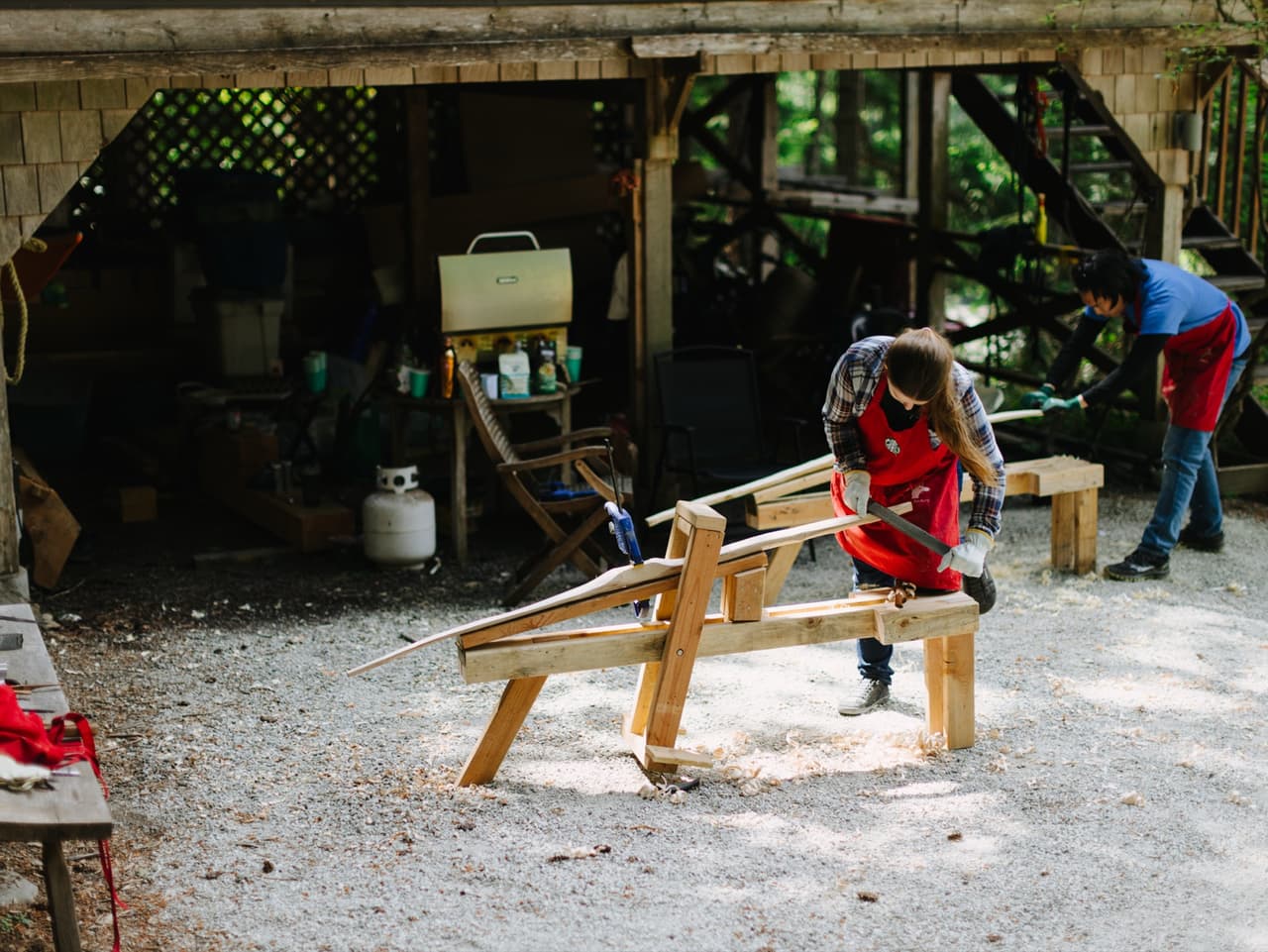
Six staves, a rack of drawknives and a group of people who had never made a bow before. Notes and photographs from the first workshop in the shop on Salt Spring.
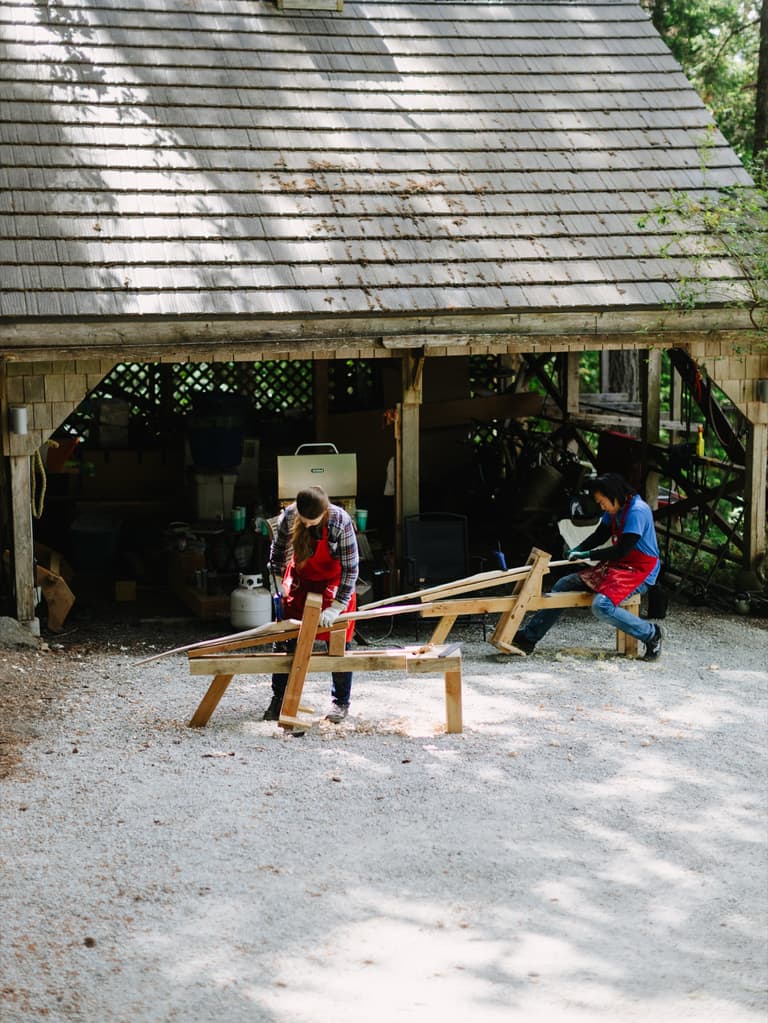
The first workshop began the way every bow does: with a stave that looks nothing like a bow. A split length of yew, seasoned and unremarkable, sitting on a shaving horse in the morning damp while a group of people who had never made one before stood around wondering where to start.
Starting with a stave
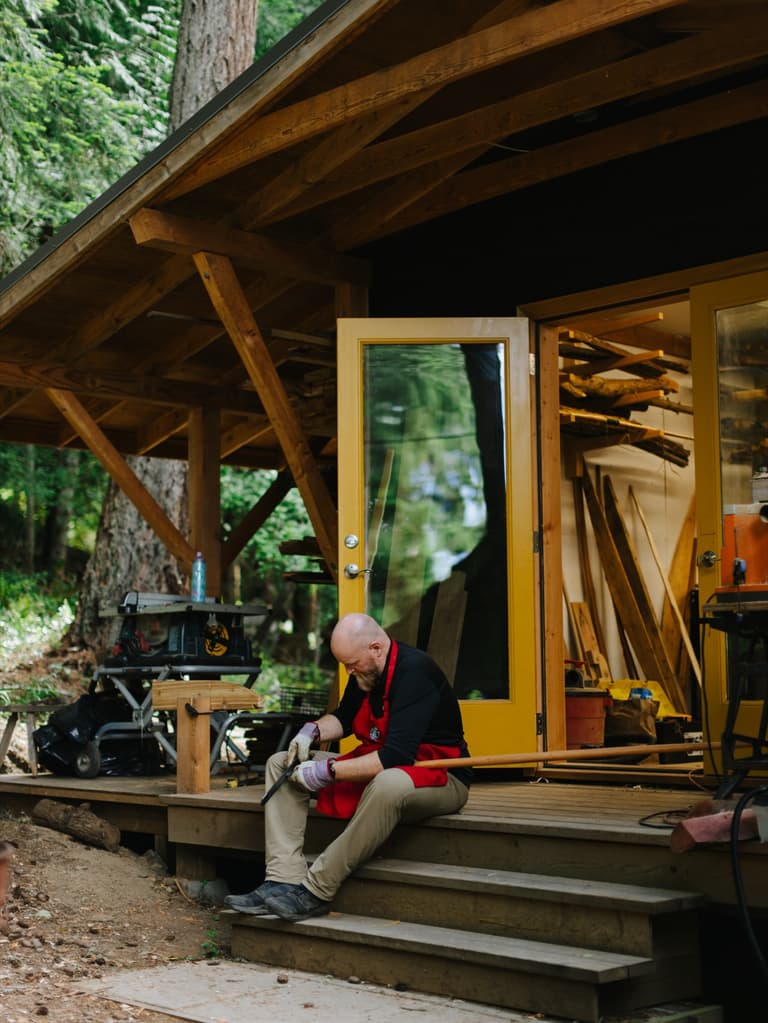
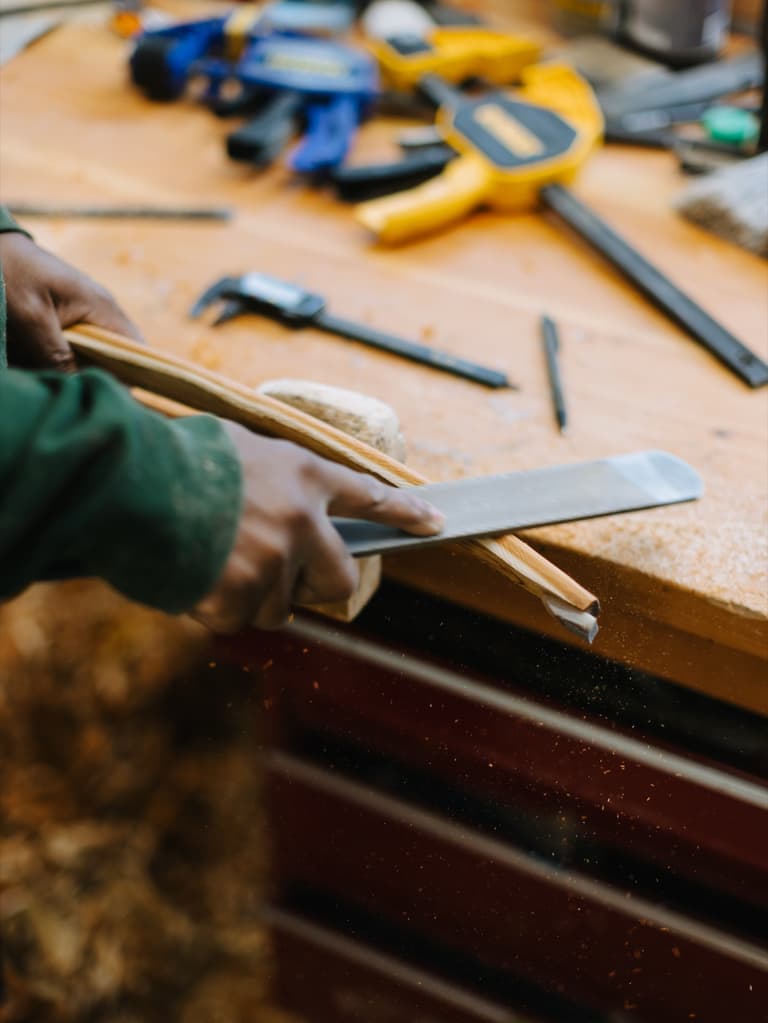
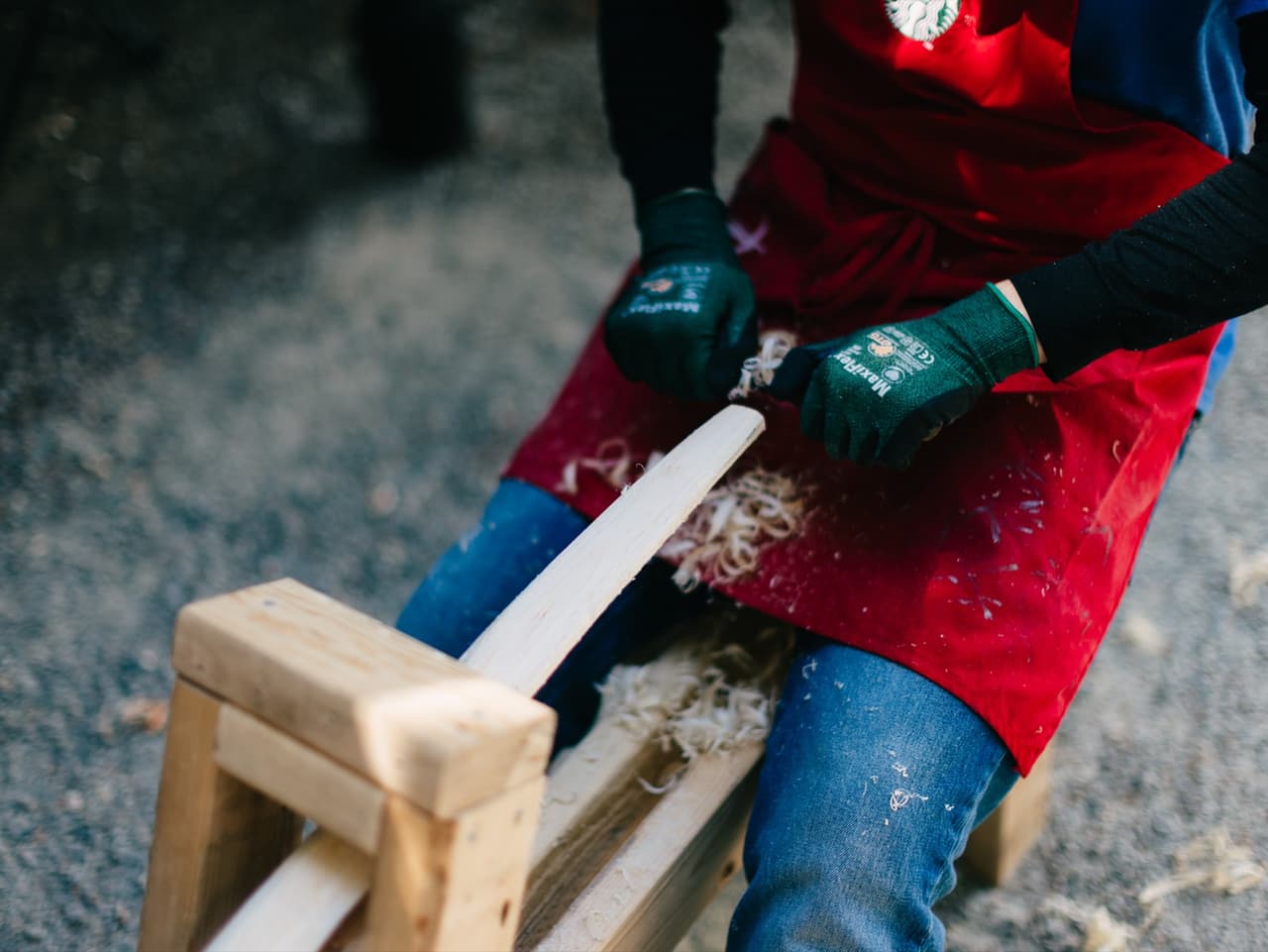
Most of the first day is spent removing wood, and almost all of the skill is in deciding which wood to remove. The back of the bow follows a single growth ring, and that ring has to be chased the whole length of the stave without ever being cut through. It is slow, and it is the part that cannot be undone. Everything after it is adjustment; this part is commitment.
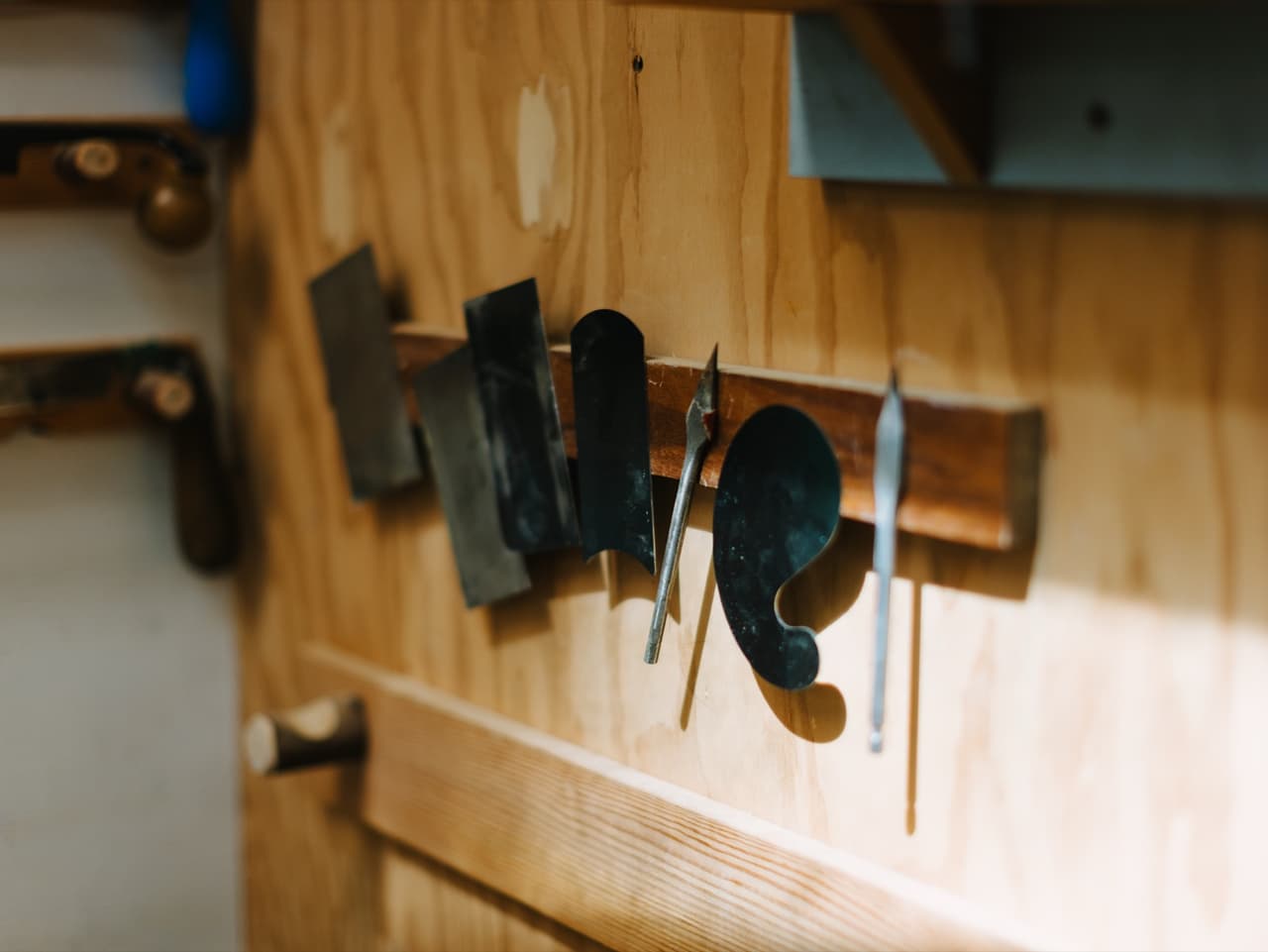
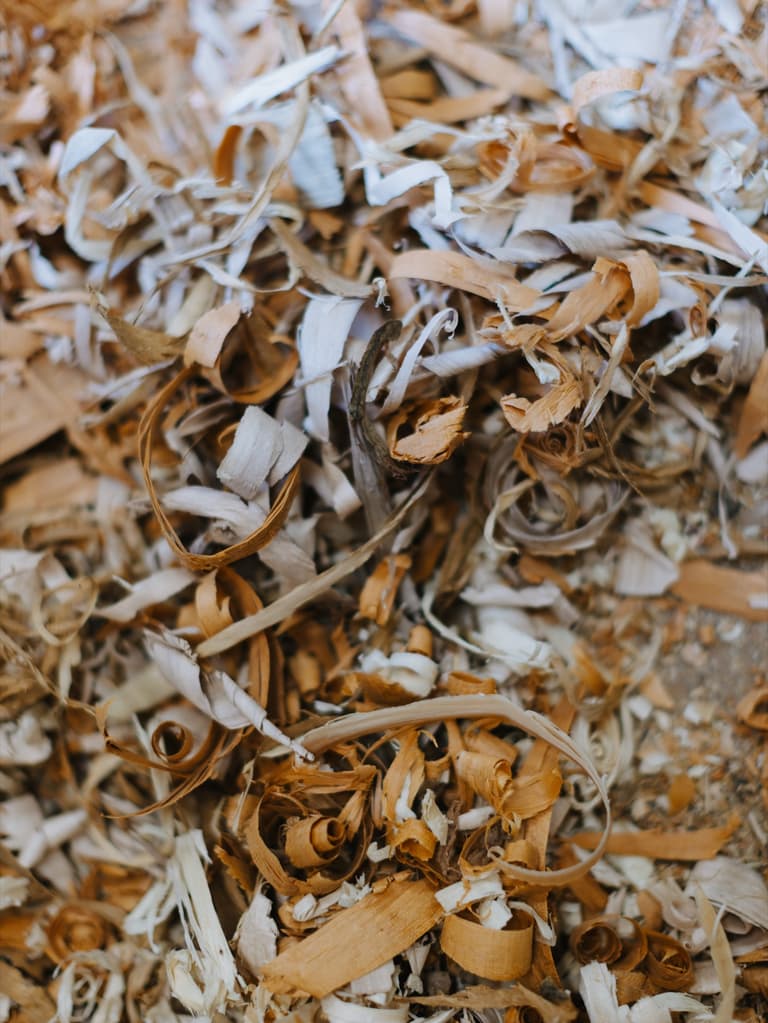
There is a particular quiet that settles over a room once everyone has found the rhythm of a drawknife — the sound of it, over and over, and very little talking. The floor fills with shavings faster than anyone expects.
Tillering, and learning to read the bend
Tillering is where a stave becomes a bow. It goes up on the tree, gets drawn a little, and comes back down so a few strokes of the scraper can go where the limb is bending too little. Then again. And again. The temptation is always to take more wood than the bend is asking for, and the whole discipline is learning to take less.
By the end everyone could see it — the stiff spot near the fade, the limb doing more than its share. That is the thing worth taking home more than the bow itself. Once you have watched a limb bend badly and corrected it with your own hands, you never quite look at a bow the same way again.
You are not making the bow bend. You are finding out where it already wants to, and getting out of the way.
Stringing up
Nocks get cut, a string gets twisted, and there is a long moment where nobody wants to be the first to draw. Every bow made that weekend came to full draw and stayed there — which is not something to take for granted, because a first bow breaking is a normal part of learning and it simply did not happen this time.
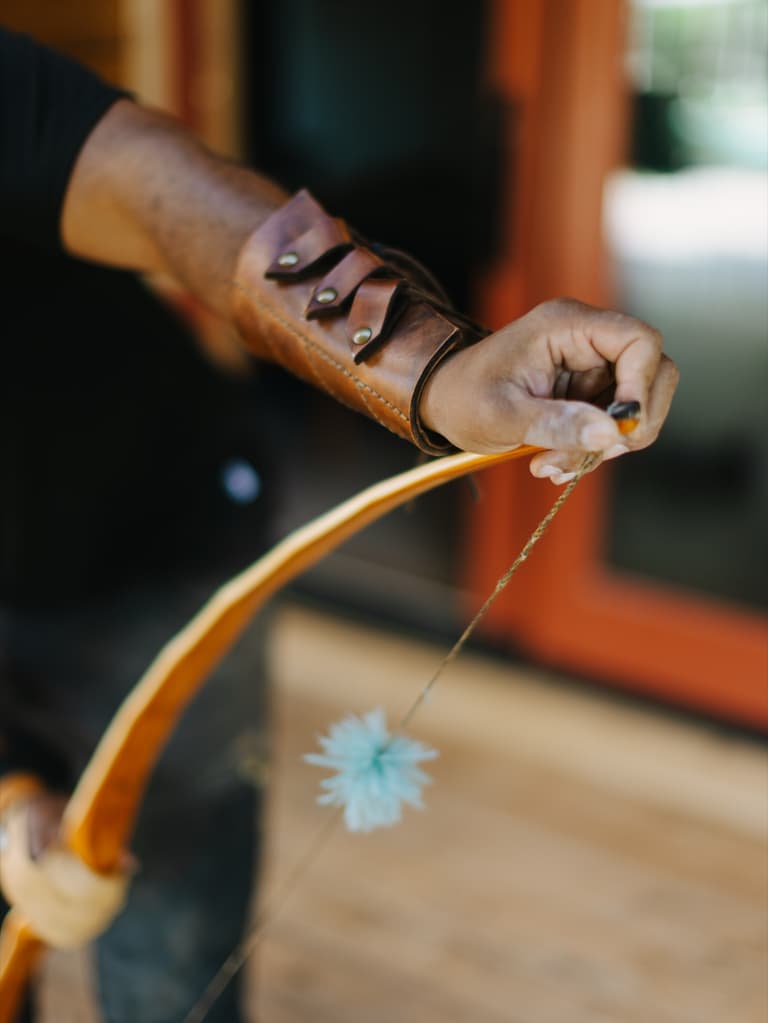
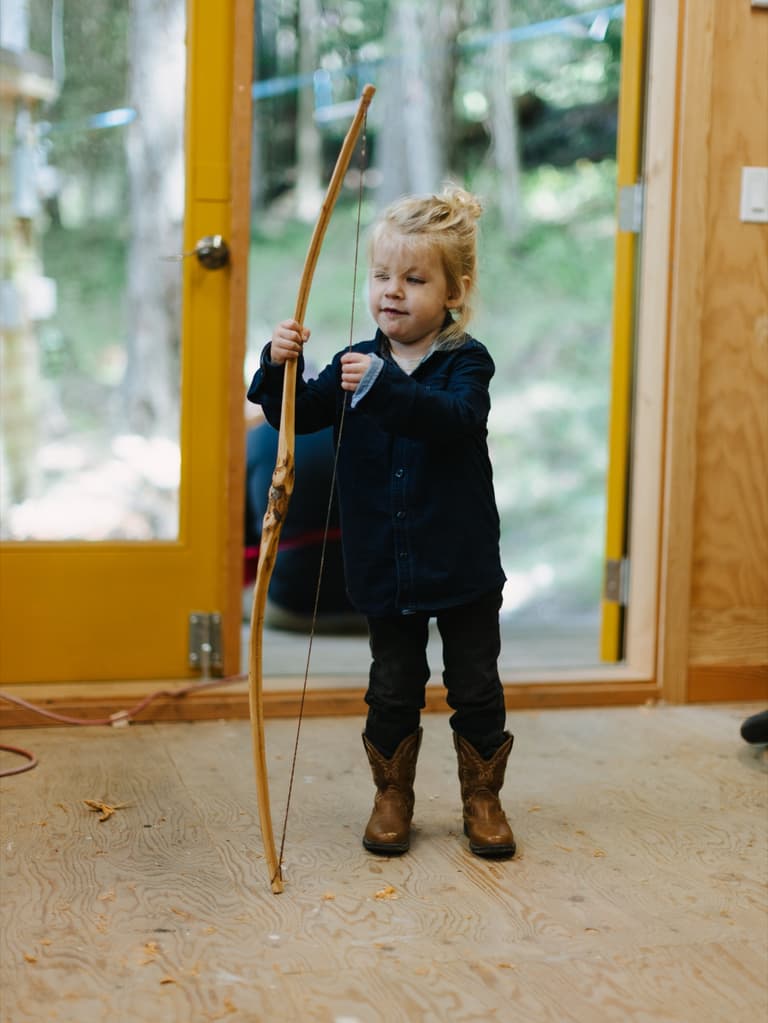
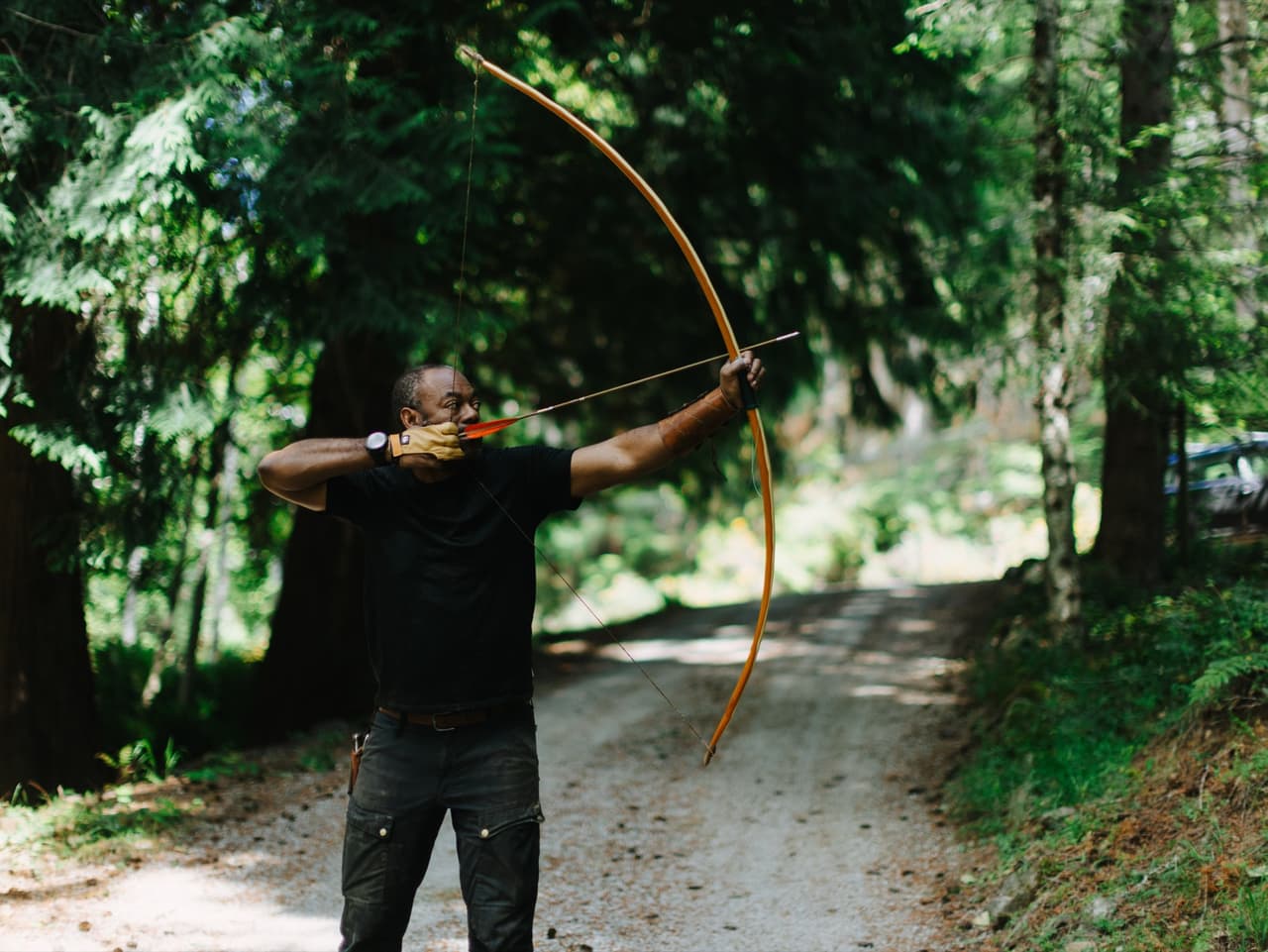
Then everyone went outside and shot them, badly and happily, down the length of the road until it got dark.
Workshops run in small groups, and they run at the speed of the slowest stave. If you would like to be told when the next dates are set, get in touch through the contact page and you will be on the list.