The Maker
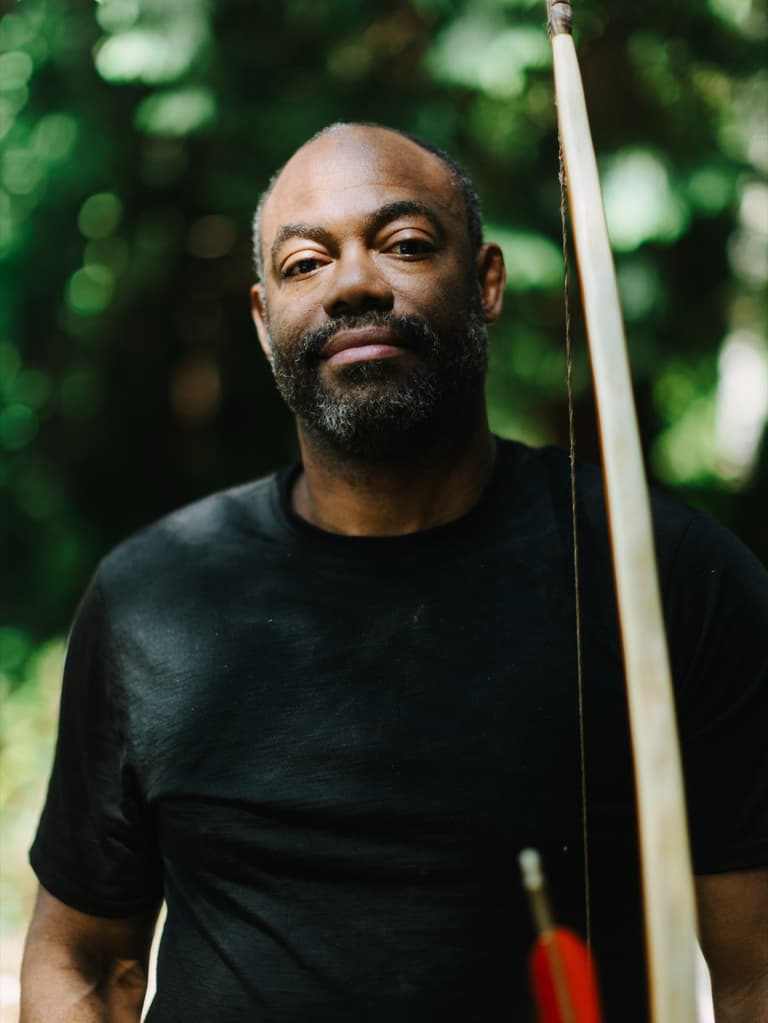
Christopher Applewhaite is a traditional bowyer, on Salt Spring Island, building wooden bows entirely with hand tools. His craft has become more than a hobby but is always for enjoyment and not a full time profession. He is a traditional bow hunter, and every bow that leaves the workshop is a fully functional weapon, built to be drawn, shot and hunted with rather than hung on a wall.
A lifelong fascination with bows and archery has grown into a worshop and an art and hobby I love to share.
Why it matters
Christopher hunts with the bows he makes. He also shoots for the pleasure of it, and to pass the craft on to others. Whether a bow is carried into the field, drawn at the range, or set on a wall, it is built to be shot.
Every bow gets shot in before it leaves.
The wood
Pacific yew a slow-growing, dense and elastic in a way almost no other wood is. The sapwood and heart wood act as a natural laminate. Sapwood stong in tension and heartwood strong in compression.
It is also increasingly scarce. The US Forest Service species record for Taxus brevifolia describes a tree that grows in the understory at a few millimetres a year and was heavily cut in the 1990s for taxol. A stave worth building on took a century to make, which is why every one here is split, sealed and seasoned rather than bought by the board foot. Cuurent logging practices to not readily allow to yew trees to regenerate or mature. Most of the wood I wirk with was salvaged prior to logging where it would have been left behind and burned while the more " valuable " wood is removed.
Many other woods make exceelent bows Ocean spray, plum, locust, maple each has unique characterisitcs, but none, at least in my opinion, match the beuty and performance of pacific yew.
Before you ask